Spravato: a different kind of depression treatment.
Spravato is a nasal spray, FDA-approved for adults whose depression hasn’t responded to antidepressants. It works on a different system in the brain than the medications you’ve already tried, which is why it can help when they haven’t.

Esketamine, as a nasal spray, given in a certified office.
- The medication is esketamine, a form of ketamine developed and approved specifically for depression. Looking for ketamine treatment in NJ?
- You take it yourself, as a nasal spray, in our office with one of our Sherpas guiding you (the specially trained team members who look after you on every treatment day), then rest for at least two hours while our team monitors you.
- The side effects mostly stay in the office. Most people feel sleepy or a little floaty for an hour or two, with our team beside them, and go home feeling like themselves, instead of living with a daily pill’s side effects. Side effects, in full · Does it cause weight gain?
- It’s FDA-approved for treatment-resistant depression in adults, on its own or with an oral antidepressant.1 It is also approved, together with an oral antidepressant, for adults with major depression who have suicidal thoughts or actions.
- It’s only given in certified offices, under a federal safety program called REMS. You never take it home.
Why past failures don’t predict this one.
Most antidepressants act on serotonin, norepinephrine, or both. Spravato acts on glutamate, the brain’s main signaling chemical, by a different route entirely.
That’s why it can help people whose history suggests nothing will. Trying another medication that works like the ones that didn’t help is a different bet from trying one that works another way.
Adults whose depression hasn’t lifted.
- You’ve tried at least two antidepressants without enough relief.
- You don’t have to stop what you’re on. Spravato can be used alone or alongside an oral antidepressant.
- A few conditions rule it out, such as certain blood-vessel problems. We check at your evaluation. Could Spravato be right for you?
Wondering whether Spravato is for you? Check if you qualify.
A two-minute read: who Spravato is for, what rules it out, and how the evaluation works.
Name, date of birth and insurer. We check your plan and call you back. No commitment.
Check my coverageRegister once, and our team starts your insurance check and reaches out to schedule your evaluation.
Request an evaluationHead to head with a standard alternative.
The largest comparison trial, ESCAPE-TRD, put Spravato against quetiapine, a common add-on medication for depression that hasn’t responded, in 676 adults.2
- At week 8: 27.1% were in remission on Spravato, against 17.6% on quetiapine.
- At week 32: 55.7% against 36.3%.
- Stopping because of side effects: 4.5% on Spravato, against 10.1% on quetiapine.
Over half of the people on Spravato were in remission by the end of the study, and fewer stopped because of side effects. More on the research.
You can stay on it for as long as you need it.
Finding something that finally helps is the hard part. In the SUSTAIN-1 trial, people who responded to Spravato and kept going stayed well longer than people who stopped,3 and in the long-term SUSTAIN-3 study, patients were followed for up to six and a half years with no new safety signals,4 one of the longest follow-up studies of any depression treatment. We also check in with you regularly to find the least frequent schedule that keeps you well: for some people that’s once a week, for others once a month, and anywhere in between.
How does Spravato work in the brain?
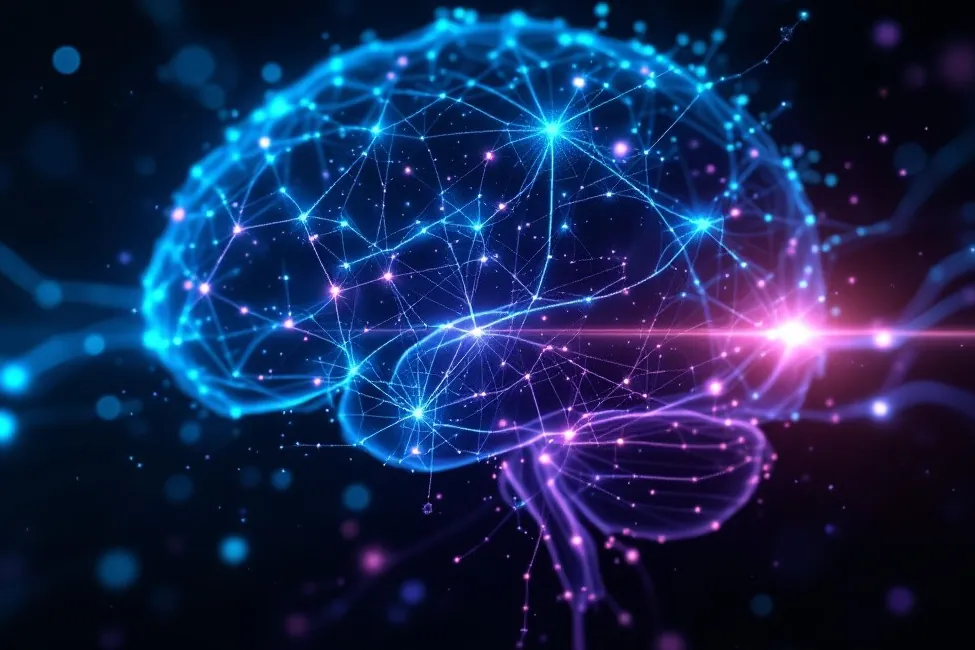
Spravato blocks a receptor in the brain called NMDA, which sets off a burst of activity in glutamate, the brain’s main signaling chemical. Researchers think that burst helps nerve cells grow new connections in the parts of the brain where depression tends to wear them down. The label notes that the exact way it relieves depression isn’t fully known (Spravato Prescribing Information), but it clearly works on a different system from the serotonin and norepinephrine medicines you’ve already tried.
What is the neuroplasticity theory of how Spravato works?
The neuroplasticity theory says Spravato helps by letting the brain rebuild connections that depression has worn down. Long-term stress and depression are linked to fewer and weaker connections (synapses) between nerve cells in the prefrontal cortex and hippocampus, areas involved in mood, motivation and thinking. In animal studies, a single dose of ketamine, the parent molecule of esketamine, increased those connections within about a day (Li et al., Science, 2010), and the new connections were needed for the antidepressant effect to last (Moda-Sava et al., Science, 2019).
How the chain is thought to work
- Brake easedSpravato blocks NMDA receptors, especially on the nerve cells that normally keep glutamate in check.
- Glutamate surgeWith that brake eased, glutamate rises briefly and activates another receptor, called AMPA.
- Growth signalsThat releases BDNF, a growth factor sometimes called fertilizer for the brain, and switches on a pathway called mTOR.
- New connectionsOver hours to days, nerve cells build new connections.
That’s the “brain coming alive” picture above. It also fits what we see: the benefit can start within days and builds across treatment, rather than waiting the 6 to 8 weeks a daily antidepressant usually needs. How long Spravato takes to work.
What other theories explain how Spravato works?
Researchers are still piecing together the full picture, and several ideas may each explain part of it. Most of this work was done with ketamine, the parent molecule of esketamine.
- Quieting an overactive “anti-reward” center. In animal studies, ketamine calms bursts of activity in the lateral habenula, a small region that drives low mood and the feeling that nothing is rewarding (Yang et al., Nature, 2018).
- A direct effect at rest. Blocking NMDA receptors while the brain is at rest may switch on production of BDNF directly, without needing the glutamate surge (Autry et al., Nature, 2011).
- A role for the breakdown products. Some research suggests a by-product of ketamine contributes to the effect (Zanos et al., Nature, 2016); how much this applies to esketamine is still debated.
What isn’t in doubt is that Spravato works on a different system from the serotonin and norepinephrine medicines most people have already tried. That’s why a history of antidepressants that didn’t help isn’t a prediction about this one.
What people ask about Spravato itself.
What is Spravato?
Spravato is esketamine, an FDA-approved nasal spray for adults with depression that hasn’t responded to at least two antidepressants. It’s given in certified offices, where you rest and are monitored for at least two hours afterward.
How does Spravato work?
Most antidepressants act on serotonin and norepinephrine. Spravato acts on glutamate, a different signaling system in the brain, which is why it can help when other medications haven’t.
Is Spravato the same as ketamine?
Related, but not the same. Spravato is esketamine, one form of the ketamine molecule, made as a nasal spray and FDA-approved specifically for depression. Unlike IV ketamine, it’s covered by most insurance. Spravato vs ketamine.
Do I have to stop my antidepressant?
No. Spravato is approved on its own or with an oral antidepressant for treatment-resistant depression, so nothing has to be taken away to start, and some people take a newer pill such as Auvelity alongside it. We decide together what’s right for you.
Can I take Spravato at home?
No. Every dose is taken in a certified office, and you stay for at least two hours afterward while our team monitors you. That’s a federal safety requirement, and it’s there to protect you. Why it’s in-office.
How quickly does it work?
Some people notice a change within days; for most who respond, it builds across the first month. In the head-to-head trial, the Spravato group had already pulled ahead by week eight. How long Spravato takes to work.